SWAU Faculty Research Contributes to Landmark Dinosaur Trackway Study in Bolivia
Apr 30 2026 - 4:00pm
By: Southwestern Adventist University
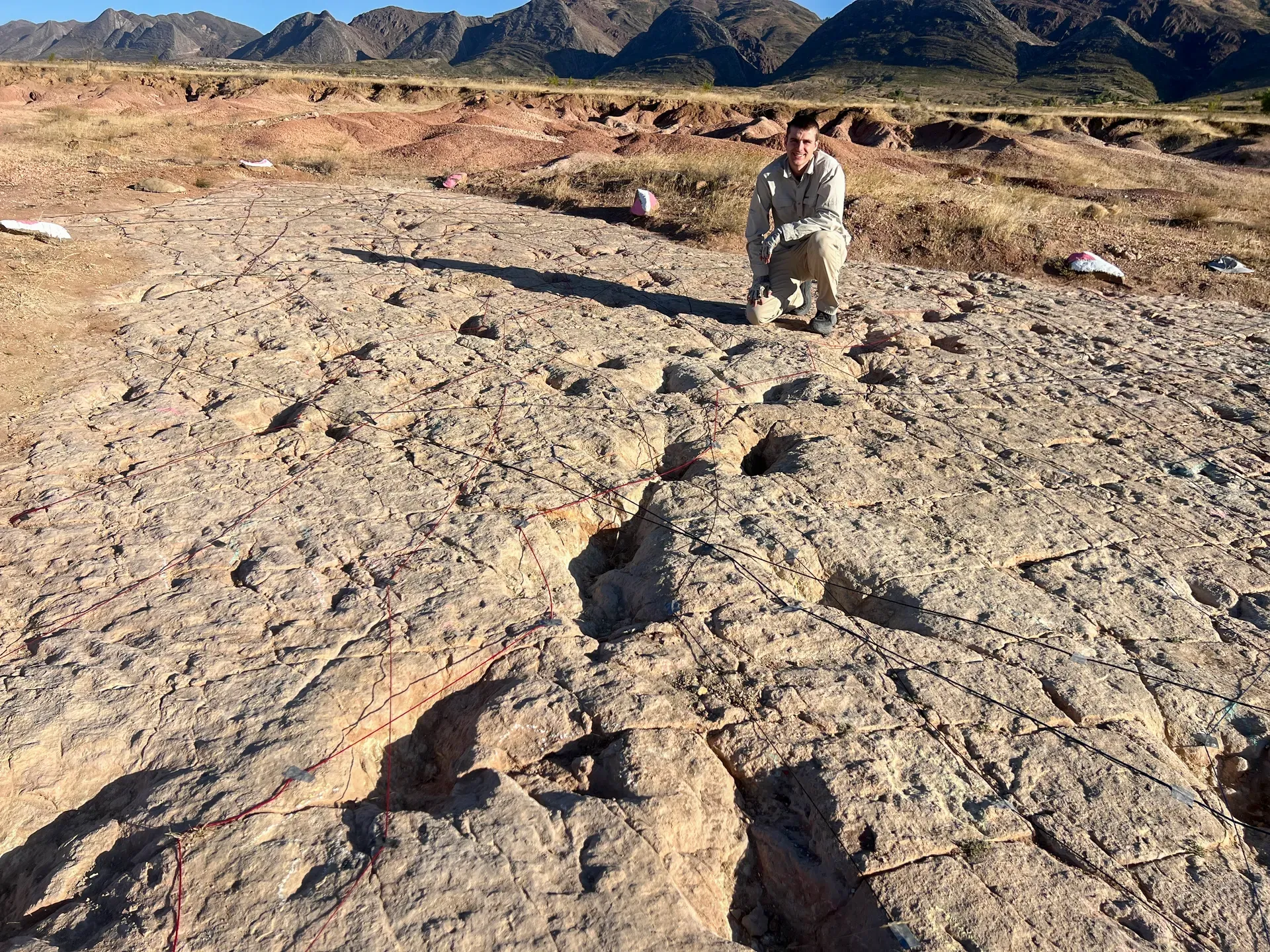
Southwestern Adventist University is celebrating the publication of new paleontological research co-authored by Jeremy McLarty, Ph.D., Associate Professor of Biology and Director of the Dinosaur Science Museum and Research Center, in a major international study examining dinosaur footprints, tail traces, and swim tracks at Carreras Pampa in Torotoro National Park, Bolivia. Published in PLOS ONE, the article documents what researchers describe as the largest dinosaur tracksite in the world.
The study, titled “Morphotypes, preservation, and taphonomy of dinosaur footprints, tail traces, and swim tracks in the largest tracksite in the world: Carreras Pampa (Upper Cretaceous), Torotoro National Park, Bolivia,” describes an exceptionally rich fossil record, with thousands of preserved tracks and trackways, along with bird prints and numerous tail traces. Together, these impressions give researchers a rare glimpse into dinosaur activity in an ancient landscape.
For McLarty, the project was especially compelling because the site had never been studied in detail. It also offered the chance to explore dinosaurs through a kind of evidence he finds especially revealing, since tracks, as he noted, “can tell us things about dinosaurs that we can’t learn from their bones alone.”
Among the paper’s most notable findings is the documentation of tail traces, identified as the first record of dinosaur tail traces in South America, the first record of theropod tail traces in the Southern Hemisphere, and only the second Upper Cretaceous record of theropod tail traces noted in the literature. McLarty emphasized that the site’s importance lies not simply in its size, but in the breadth of what it preserves, including evidence of varied dinosaur behavior such as swimming, changing direction, and dragging toes and tails.
That broader sense of discovery is part of what makes the research meaningful beyond the scientific community. McLarty noted that people are drawn to the idea that “there are still new things to find and understand,” and that the world continues to hold “fascinating mysteries waiting to be uncovered.”
For Southwestern Adventist University, McLarty’s role in the project reflects the institution’s mission of “Inspiring knowledge, faith, and service through Christ-centered education.” As a faculty member, researcher, and museum director, he models how scientific inquiry and teaching can work together, linking classroom learning with real-world discovery and international collaboration.
That connection to students is especially important to him. One of the joys of research, he explained, is becoming “the first person to know a particular piece of information” and then having “the privilege of sharing it with others.” He hopes that spirit of discovery will shape students as well, reminding them that even in the classroom they are gaining “the tools” they will need to make discoveries of their own.
Read the full study in PLOS ONE:
https://journals.plos.org/plosone/article?id=10.1371/journal.pone.0335973